Analytics
Google Adds ‘AI Assistant’ Channel to GA4 & Tests AI Performance Report in Search Console
More users are engaging with AI-driven search results than ever before. Between Google, ChatGPT and other AI platforms, nearly half of all online search activity is now being funneled through AI. As more consumers use AI assistants to discover businesses, marketers have been asking “How much do I show up for AI search and how much traffic is it actually sending to my site?”
Google is taking steps to make AI-driven traffic and AI search visibility easier to measure. Starting in May, Google began rolling out a new AI Assistant traffic channel to GA4 properties, and in June they began testing AI-driven Search reporting in Search Console.
New GA4 Traffic Channel for ‘AI Assistants’
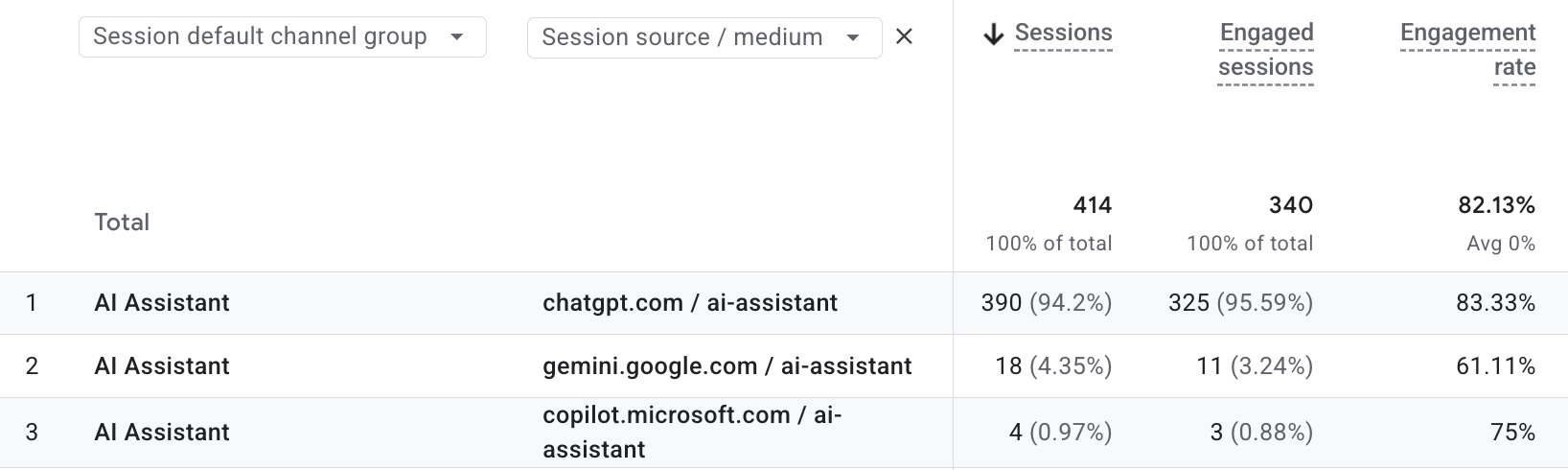
The new AI Assistants channel in GA4 makes it easier for users to monitor the volume and performance of traffic from platforms like ChatGPT, Copilot, Claude and Google’s own Gemini. It does not reflect traffic driven by Google AI Overviews or AI Mode (more on that below.)
Previously, AI traffic was treated as Referral traffic or even mixed in with other channels. If you wanted to understand how much traffic AI assistants generated overall, you needed to create customer channel groupings specifying the possible traffic source dimensions for each platform–which have changed over time as the platforms have grown.
Now, you can see traffic from AI Assistants in the main Traffic overview reports in GA4 next to other channels like Organic Search, Paid Search, Shopping and Paid Social traffic. It’s now much easier for marketers to see how AI-driven traffic compares to their normal Organic traffic and how those users are engaging with their website–and, more importantly, how those metrics change over time.
While traffic driven directly to websites by AI platforms still constitutes a relatively small percentage of sessions, it’s a rapidly growing segment. A few trends we’re seeing for the businesses we work with:
- Trackable AI-driven traffic to our partners’ sites grew 70% since the beginning of this year
- Some sites have seen this traffic double or more in that time
- This traffic is highly engaged, with some businesses seeing lead conversion rates for this traffic 3x’s higher than normal Organic Search traffic
Search Console Updates & Measuring AI Search Visibility
Unfortunately, Google still does not give GA4 users insight into traffic driven by AI Overviews, which are appearing for 43% of US searches as of June. Google is beta testing Generative AI performance reports in Search Console, however. The beta currently does not include data on clicks driven by these searches, only impressions. It also doesn’t yet give insight into the queries or prompts that drove AI search impressions for your site, though it does show which pages are being cited the most.
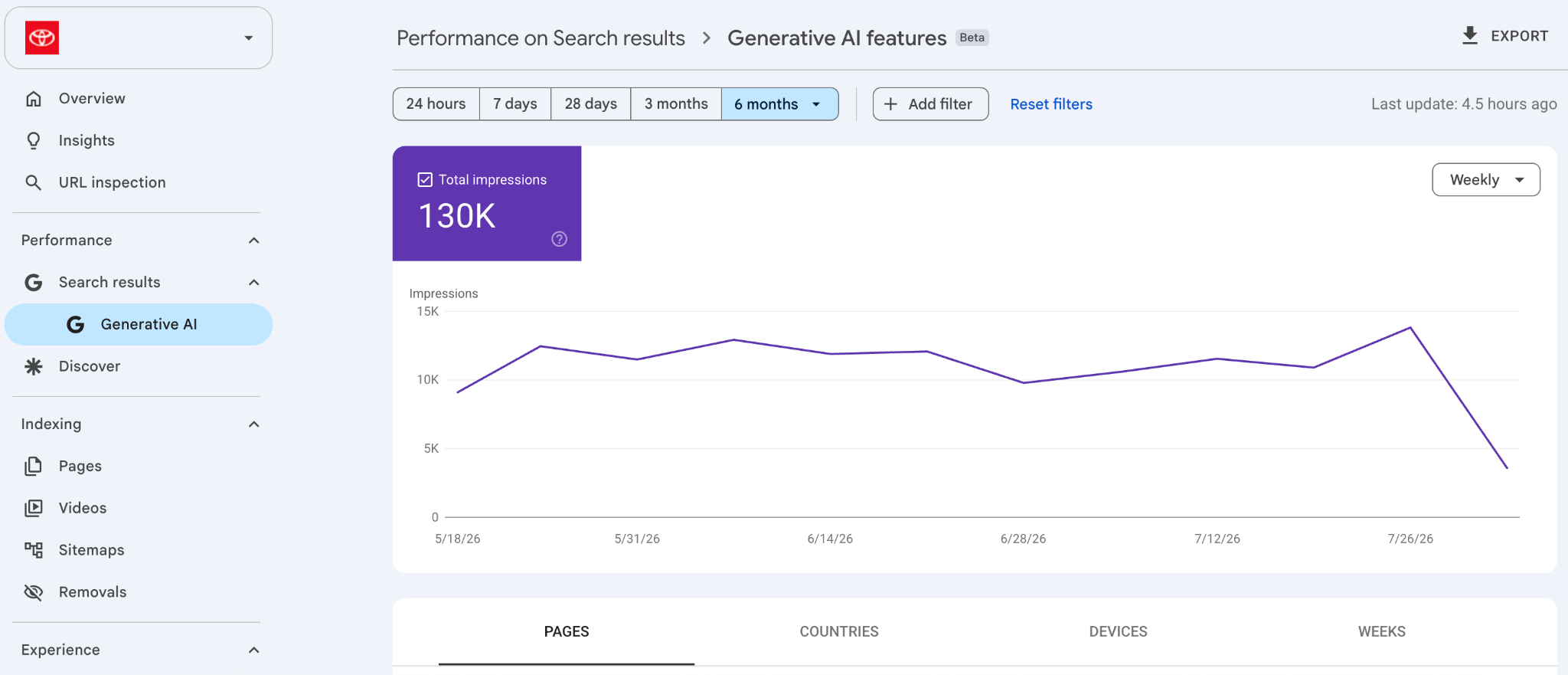
That’s still a significant improvement, since Impression and Visibility metrics are even more important for AI-driven search than standard Organic results, with more users finding answers directly in search results and fewer clickthroughs directly to websites.
While GA4 reports your site traffic from ChatGPT, Perplexity, Copilot, etc., Google platforms can’t give you insights into your AI search visibility and impressions from those non-Google AI engines. Advanced marketers are taking advantage of third party SEO tools that have introduced AI search visibility measurement to track how often their brand is cited compared to their competitors across different AI platforms.
Generative Engine Optimization & Next Steps for AI-Adaptive Marketers
While the tools for tracking and analyzing this traffic are still evolving, there are steps you can take today to grow your site’s visibility for these searches. Generative Engine Optimization, or GEO, refers to the process of optimizing your digital footprint to improve visibility and earn citations in the answers generated by AI search platforms.
GEO complements but does not replace traditional SEO efforts, which remain essential since AI assistants rely heavily on search indexing and site authority rankings. GEO builds on SEO by increasing the likelihood that AI platforms reference your content and recommend your business. GEO strategies accomplish this through making your site LLM friendly, researching the prompts that your site and your competitors’ sites are showing for and tracking your visibility across various AI platforms and for different types of prompts or queries. The GEO process starts with a thorough audit of your current site’s current GEO status and readiness.
The businesses that begin measuring and optimizing for AI discovery today will be better positioned as AI search continues to grow. Here are five things marketers can do today to get started:
- Verify AI Assistant appearing in your GA4 properties
- Track your AI Assistant site traffic month-over-month
- Compare Engagement and Conversions to other channels, particularly normal Organic Search
- Review landing pages for AI Assistant traffic to get a sense of the queries driving AI visits
- Begin a GEO strategy before your competitors do; reach out to The Moran Group to learn more about GEO and begin your site audit